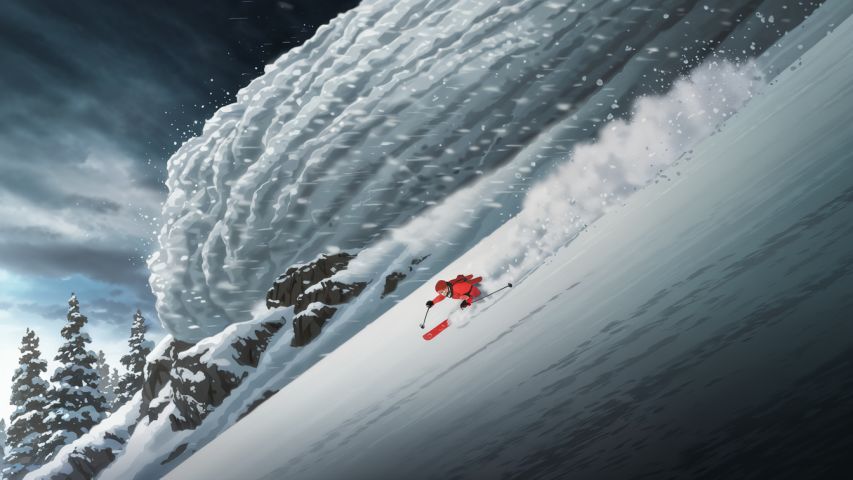
Chapter 1: The Snow Falls
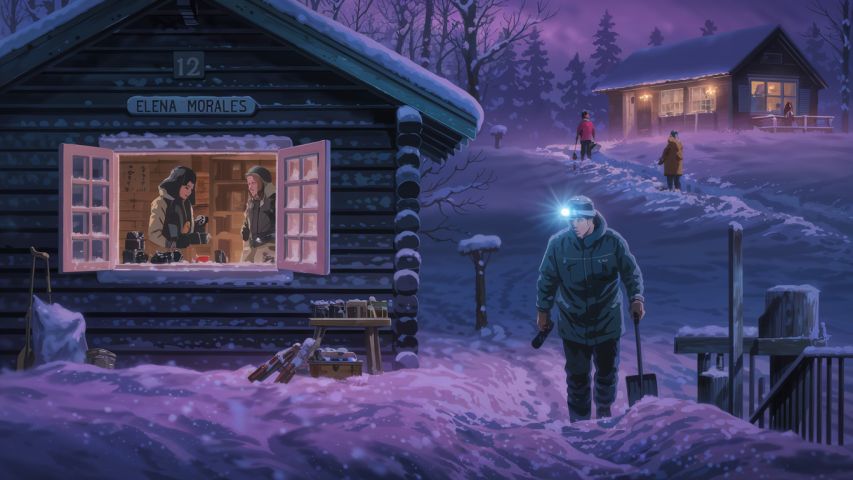
Elena Morales arrived at Cabin 12 just as dusk stained the snow lavender. She unpacked her gear—cameras, lenses, a battered field journal—and paused at the frost-rimmed window. For days the storms had whispered: first just flurries, then steady snow, now full-on cascade of flakes, the trees bending under weight. But Elena loved this. Every snowflake held a story.
Down the hill, Callum Reid emerged from Cabin 3, headlamp glowing faint in the whiteout. He trudged toward the guest lodge, clipboard in hand, checking drift depth by drift depth. Callum designed the cabins: their beams, supports, roofs shaped to pass the worst winter, or so he believed.
Tessa Sinclair stomped across her porch, shoveling walkway. Her brother Owen sat inside, tracing frost crystals on the windowpanes. Tessa threw down the shovel. “It’s useless, Owen. More snow. Endless.”
“Better than the noise of the city,” he said. In their joint escape, silence had become a currency they both cherished.
Hal Baxter watched from the caretaker’s house, leaning on his walking stick. At eighty-two, he felt the weight of winters in his bones. But this one… something gnawed at him. Something wrong with the way the wind carried the snow.
Chapter 2: Warnings on the Ridge
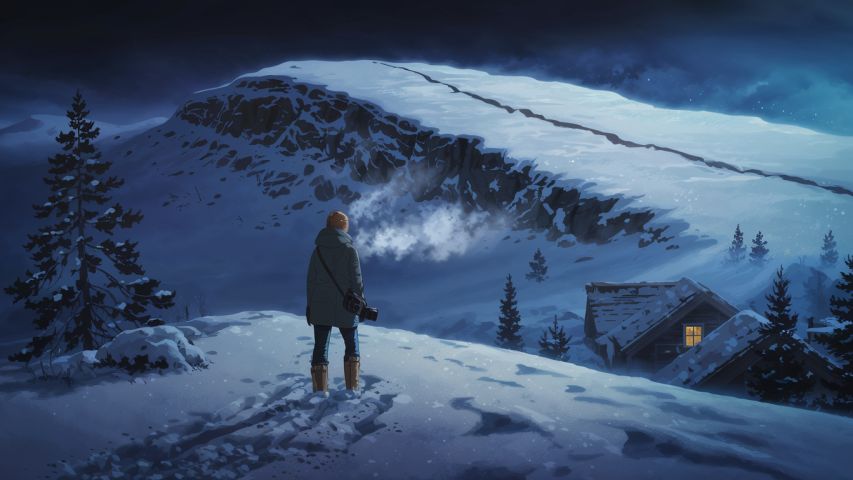
Elena rose before dawn. At 4:30 a.m., the wind roared like wild horses across the mountain crest. She pulled on boots, camera around her neck. She had seen ridge cracks—long fractures in snowpack ridges that scrape open under the lightest strain.
She walked uphill toward a clearing. Each step sank deep. The tree cover thinned. She halted, heart pounding—a slab had shifted at the ridge above. A whisper became a crack. She stepped back, camera shaking in her gloved hands.
“Not good,” she murmured, recording video. The snowpack above looked layered: dense slabs of hard snow over weak sugary snow beneath. One more heavy snowfall or wind load, and it would slide.
She raced back to the cabins, breath icy in her lungs. At Cabin 8, she found Mila, checking medical supplies.
“Mila,” Elena shouted through door. “We need to alert everybody. Ridge is unstable.”
Mila frowned. “You sure?”
Elena showed the video. Mila’s heart sank.
Meanwhile, Callum walked the trails between cabins, delivering notices: formal but heavy with intent. “Meeting at the lodge in an hour. All of you.”
Chapter 3: The Gathering Storm
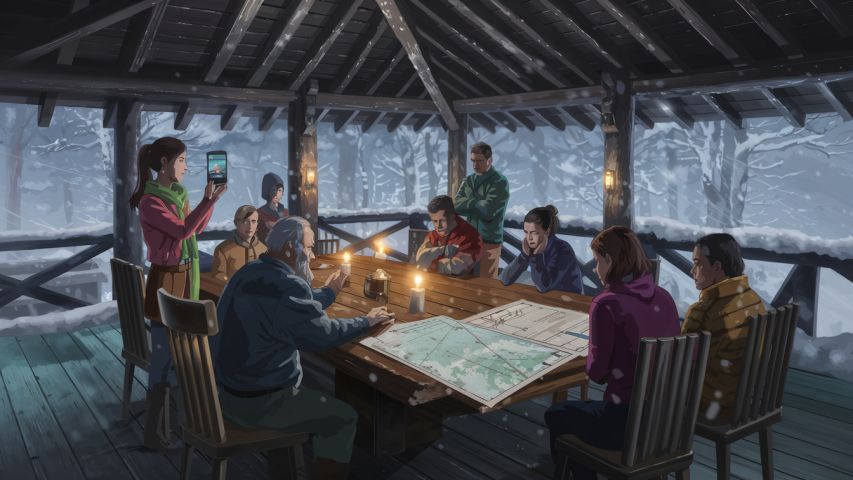
In the lodge, a high vaulted wooden ceiling lined with thick beams, the cabin residents gathered. Snow piled almost to the porch; inside, candles flickered.
Elena showed the video of the ridge crack. Hal rubbed his chin. Callum unfolded maps of snowpack readings, wind direction, recent storms. Tessa glared at Callum; she saw this as bureaucracy.
One woman, Astrid, spoke up. “My grandchildren are still on the slope!” She traveled up from Cabin 15. Her fear was raw.
Owen rose, voice shaking. “This place—these cabins—are our homes. I can’t just abandon them.”
Hal nodded. “These cabins are more than home. They are what I raised with. What I built with sweat.”
Mila stood. “But if an avalanche hits, all that’ll matter is whether we live.”
A hush. Arguments flared. Some—most—wanted to stay until forced. Others ready to leave for shelters far below. Callum pressed: “There are emergency shelters in the valley. Roads still passable. If we wait for night or more snowfall, they’ll be cut off.”
Tessa clenched hands, glare toward snow-streaked windows.
Chapter 4: First Movement
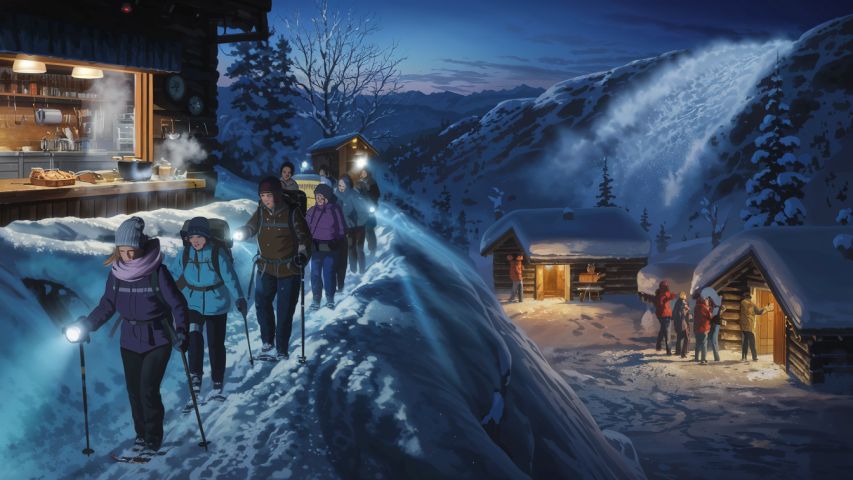
That evening, the first evacuation decision: those willing to go now gather supplies; others remain. Elk stew simmering in the lodge kitchen, bread baked that morning—some pack food, others leave.
Elena, Mila, and a group of families set out under headlamps, skis or snowshoes. Carrying only essentials: water, warmth, some keepsakes. The trail down is steep; the wind bites.
Meanwhile, back at the cabins, Hal, Callum, and those who refused to leave stay behind. They double-check doors, sanctify their spaces as though cabins are sanctuaries. Some try shoveling snow off roofs, others talk in hushed tones about memories.
As Elena’s group descends, there is a distant rumble. Snow shifting high above. They halt. A volley of snow balls down the ridge: small at first, then cascading.
Chapter 5: Stand or Flee
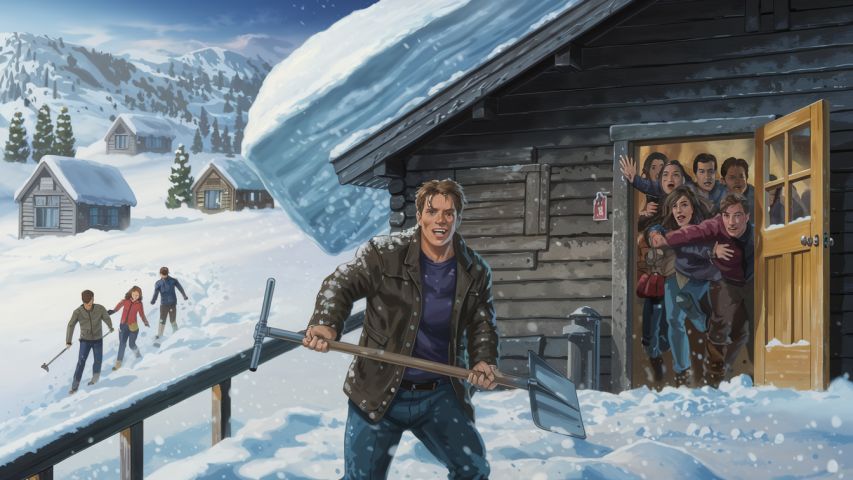
Callum stood on the deck of Cabin 3, shovel in hand. Snow from the roof’s edge clinked. A slab the size of a car ripped away above him and hurtled downward. He froze.
Hal shouted: “For God’s sake, we move!”
But Callum shook his head. “These cabins can withstand it! They’re made for this.”
Inside Cabin 3, Mila barged in. “He’s crazy.” She grabbed him. “We go now.”
Callum’s eyes filled with tears: pride, fear, love.
Meanwhile Owen and Tessa, descending with Elena, turned to look upward: the earth cracked in snowscape, loud enough to sound like thunder. They ran.
Chapter 6: The Shelter Run
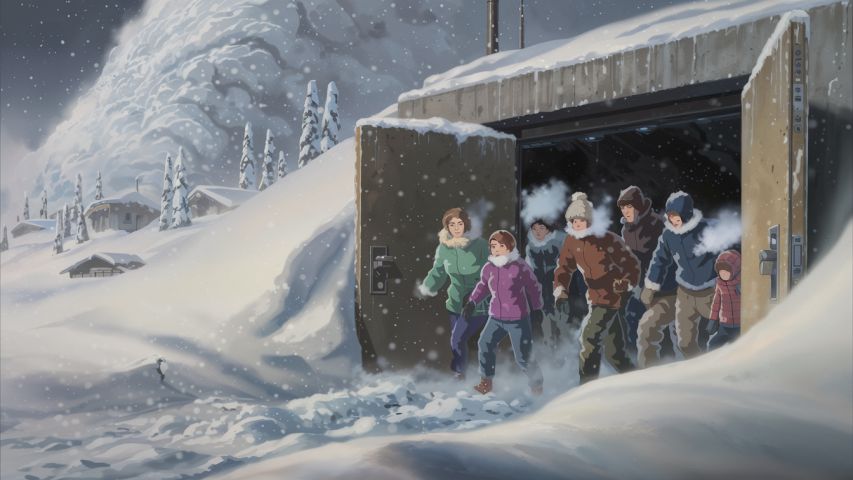
The descent is harrowing. Two-foot snow drifts, buried trees, brittle ice patches. The wind screams, visibility just a few feet. Elena slips; Mila hauls her back. Tessa falls; Owen helps.
Behind, distant thunder of the mounting avalanche.
The shelter: a stout concrete structure built for emergencies. Elena, Mila, Tessa, Owen, Astrid and her grandchildren burst inside, breaths ragged. They brace the doors; snow hits, pummels, vibrates through the walls.
Outside, the avalanche’s wall of snow—hundreds of feet tall—roars across the slope, sweeping away cabins, trees, blurring everything to white.
Chapter 7: Collapse and Loss
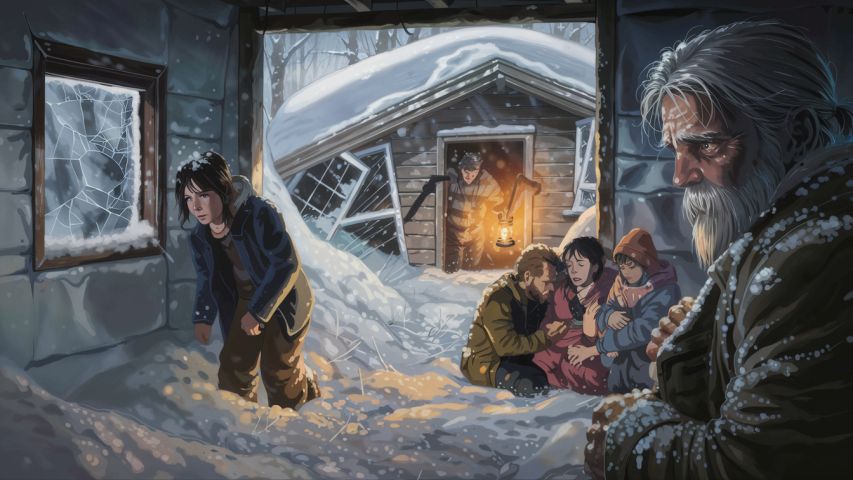
Inside the shelter, turbulence: heat, shaking, shouts. Elena inches to a small window; looks out. Cabin 3’s roof caves; teh snow swallows doors; windows shatter.
Callum’s scream: a distant echo. Elena’s heart wrench.
Harold’s silver-haired face is visible over weathered skin. He murmurs. “We stayed… too long.” Grief raw.
Tessa sobs. Owen holds her. Mila tries to calm children. Elena’s camera lies broken beside her.
Chapter 8: Redemption and Rebirth
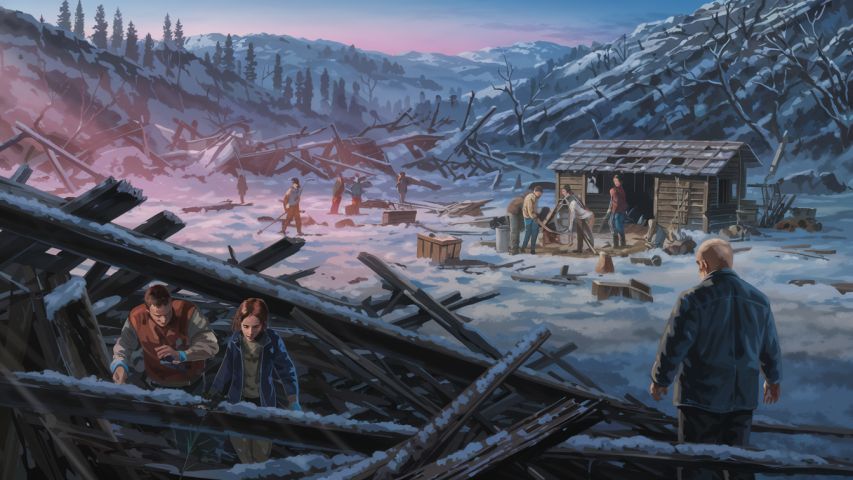
Dawn breaks. Snow settles. The silence is heavy. They emerge: world altered. Only a few cabins left standing. Trees torn, landscapes vanished.
Callum emerges from beneath broken beams, alive but injured. Hal pulls him out. Callum’s eyes lock with Elena’s. Shame, relief.
Over the next days, they search for survivors, tend to the injured, salvage what they can. Callum admits his stubbornness was pride.
Elena, photographing the aftermath, captures both ruin and resilience.
Tessa rebuilds a small makeshift cabin in the valley near the shelter; Owen helps with tools.
The people decide: they can rebuild, but differently. Not in the high slopes, but safer ground. Callum will design anew.
Hal, frail but steady, watches the new settlement begin—written in timber, stone, and cautious hope.
Chapter 9: Ashes and Echoes
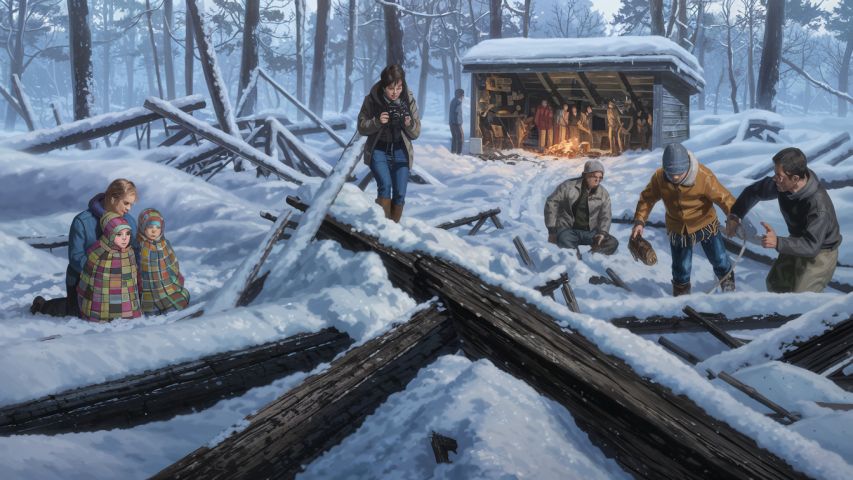
The first sunlight on January 29, 2026, revealed destruction unlike what anyone expected. Charred trees, splintered wood, snow heaped so high it swallowed entire cabins. Elena’s fingers trembled on her camera as she climbed over debris, photographing raw loss.
Astrid wept beside the ruins of Cabin 15. “We should’ve left sooner,” she said, voice broken. Her grandchildren shivered, clutching scraps of clothing. Mila knelt beside them, wrapping them in spare quilts.
Callum emerged from beneath broken logs with a fractured leg. Hal, supporting him, led him to the cleared path to the shelter. Callum tried to apologize, but Hal waved him silent.
“I’m just glad you’re alive,” he said. Weak but firm.
Inside the shelter, the group gathered for a fire—a salvage: charred timbers, but kindling enough. Elena, sitting beside Tessa and Owen, listened to soft sobs, then quiet laughter as some children began playing. Life insists on itself.
At dusk, they sent out search parties, including brave souls who’d stayed behind—Callum among them—for others possibly trapped. They found Nora, the young painter in Cabin 17, alive, clutching her sketchbooks. Her eyes wild, she said the snow buried her half through the night, but she dug her way toward light.
Chapter 10: Secrets Uncovered
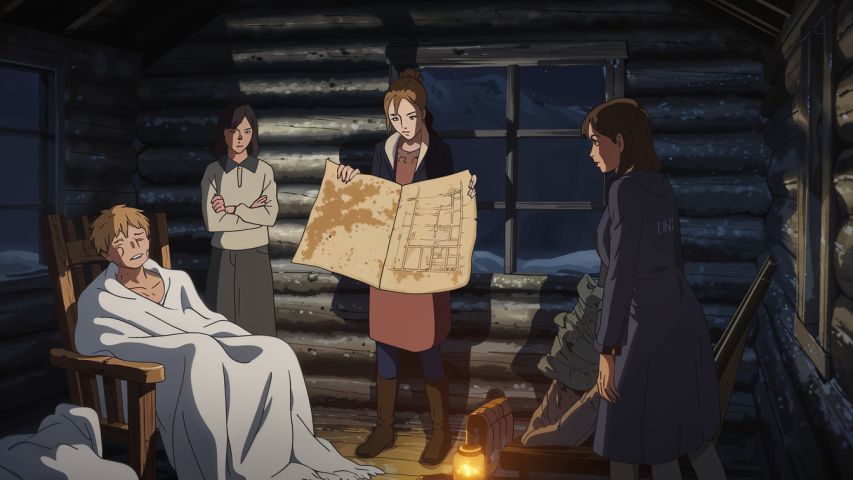
While assessing damage, Elena discovered among Callum’s blueprints something odd: an old design plan showing that under certain snow conditions, meltwater drainage routes could cause catastrophic failure of snowpack. The plans were outdated and unused because Callum had opted for aesthetics over the engineer’s warnings.
That night, Elena confronted him. Callum, feverish and weak, admitted he received a warning from engineers years ago but set it aside—he couldn’t bear to change the design, the cabins were his legacy. “It would have looked wrong,” he said, tears in his eyes. Pride bruised him more than the avalanche.
Mila listened quietly, then spoke: “Every one of us depended on you. Not only for beauty, but for safety.”
Tessa, overhearing the confrontation, stepped forward. “We lost everything because of that. My dream cabin… gone. Still, I believe you can help us build something that’s safe and true.” Her voice trembled but was hopeful.
Elena withdrew, heart heavy. She realized that forgiveness would be part of survival—hers, Callum’s, everyone’s.
Chapter 11: The New Foundations
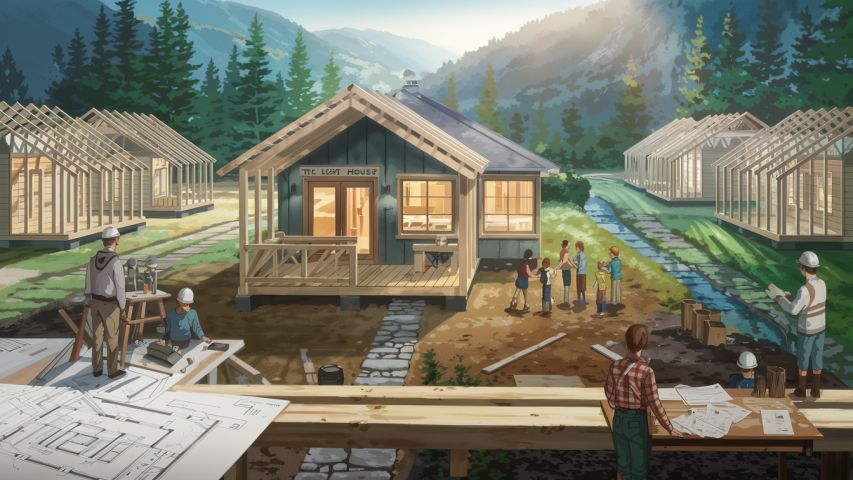
Plans began forming. A site in the valley, less prone to avalanche danger, was chosen. Lower altitude, close to trees and water courses. Callum, with Mila consulting, redesigned the cabins: reinforced structures, angled roofs, safer drainage, escape routes built-in.
Hal, though aged, inspected every beam, walked every foundation, reminding younger people of what works, what risks to avoid. He shared stories of past winters—the snowpack, the skies, the unpredictable storms.
Elena documented every step—the sketches, the debates, the late nights around fires. Owen and Tessa drew up their own cabin plan: modest, but theirs. They added a wrap-around porch, large windows facing sunrise, and a small studio space for art. They called it “The Light House.”
Astrid offered part of her land to accommodate those who had lost their homes, gifting space between evergreens. Her grandchildren planted saplings, each a marker of hope.
Chapter 12: Home Again
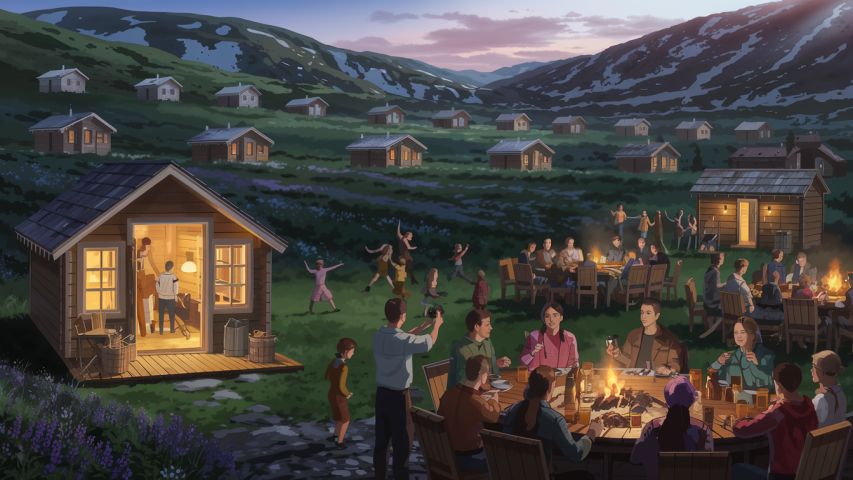
Spring’s thaw came slow. Snow retreated, melting into streams that burbled under ice. Soon, green shoots broke soil. Wildflowers—heather, lupine—erupted color on slopes where cabins once stood.
On May 1, 2026, the first new cabin was completed: one small house built by Tessa, Owen, and Callum. They lit a lamp inside; its glow poured from tall windows, golden in dusk.
In the new settlement: 20 cabins, two shelters, a shared lodge. The people gathered for the inaugural dinner. Elena brought wild mushrooms, Marella her homemade cheese; children danced. Mila stood off to the side, watching the faces she’d helped heal.
Callum raised a glass of cider. “To those we lost,” he said. Silence and tears. “To those who stayed,” he added, voice firm. “And to those who chose again.”
Elena stood beside him. She snapped a photograph—flames reflected in smiling faces, among timber and green hills. The shot caught sorrow and laughter intertwined.
Hal limped forward, leaning on his stick. “We’re home,” he said.
And though scars remained—in the land, in memories, in cabins that once stood high where avalanches lived—life had returned. Not perfect, not unbroken, but rooted anew, tending toward hope.
Epilogue: Echoes Three Winters Later
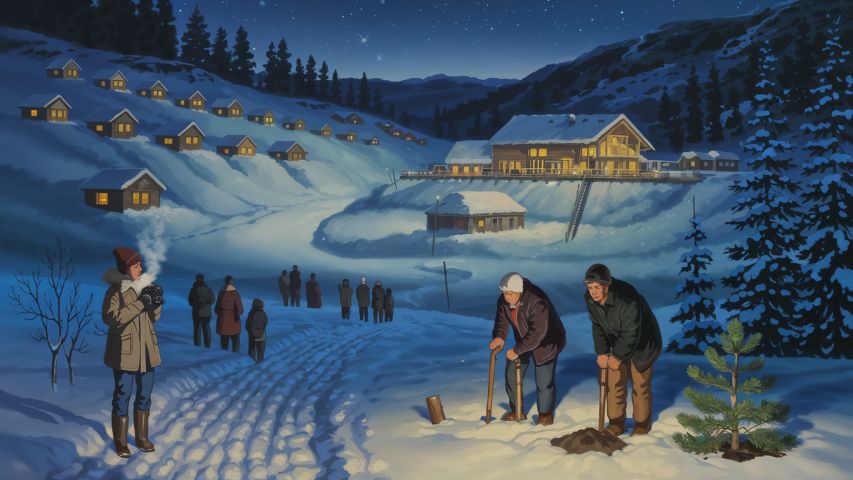
It was mid-February, three years after the avalanche—February 2029. Snow still came, but the new settlement in the valley had learned its lessons. The cab-in houses lined gentle slopes, roof-angles designed to shed snow, foundations raised, trees as natural windbreaks. Shelter bunkers stood in two points—one halfway up the mountain, one down at river’s fork—ready for emergency.
Elena Morales returned for the snowstorm, lugging her camera but also lighter inside—she had found peace. She walked the trails, breathing cold air, photographing the cylinders of frost, the cedars dusted in crystal, tracks of fox and hare. She paused often, fingers brushing snowflakes, memories of that day on the ridge—before the avalanche, during, after. She had published a book: White Silence, images and stories of loss and rebuilding. It was used in safety seminars now. Her voice, once quiet, had become one of counsel in the community.
Callum Reid hobbled across a porch, cane in hand, helping raise a young fir sapling. He had married Tessa Sinclair. They lived in The Light House they built—a place of art and warmth. Their nights were shared between design sketches and laughter with Owen—now Tessa’s husband—and children with cheeks like winter apples.
Hal Baxter, old as the oldest pines, still stood each morning on the main deck of the lodge. He drank tea, watched the snow rise then fall. He was frail, but his eyes still shone: when kraffting beams for cabins, when advising on safety measures, when telling stories to wide-eyed children. In their eyes, he saw the next generation of guardians.
Mila Chen had stayed close too. She ran a small clinic in the valley town; winter injuries visited less often now, but her presence meant more: people trusted the land again. She taught wilderness medicine courses during off-seasons, bringing students to visit the cabins, teaching them not only how to survive, but how to respect when to stay, when to leave.
That evening, after the worst of Blizzard Iris had passed, a gathering formed at the lodge—residents, old and new. They lit lanterns: glass globes filled with oil and floating candles. They floated them down the river that split the valley, sending light drifting against current and snow-melt. Each lantern carried a name—those they lost: Harold “Hal” Baxter’s dear friend from high ridge, Astrid’s father, Nora’s father. Each lantern was a remembrance, a promise each year that they would neither forget nor be bound by the past.
Elena, lantern in hand, stood next to Callum. He said softly, “I still wake some nights, dreaming of the crack in the ridge.”
She nodded, “So do I.” But she let the lantern go—hands steady—and watched it drift away, light wobbling, then glowing steady in the dark water. They stood together, the cold around them, warmth building. The avalanche had carved them, shaped them—but had not destroyed the heart of all who said: we must build again.
Snowflakes drifted down. Children laughed. Dogs pulled sleighs. The cabins glowed in yellow windows. The lodge, once refuge, now hearth.
“Home,” Callum whispered, and Elena smiled.
Because home was no longer a place alone—it was the gathering, the choice, the bearing of scars. The letting go, the building up. The acceptance that life’s avalanche doesn’t always erase, but reshapes, and those who endure are those who love despite fear.
And under moonlight, across trees, the valley held its breath—and its dreams, safe this time.

 Jay Doiron's Blog
Leave a comment